1439 字
7 分钟
JUC-synchronized
从临界区与竞态条件出发,系统理解 Java synchronized 的原理、用法与常见场景。
JUC:深入理解 synchronized
在并发编程中,synchronized 是最基础、也最常用的线程同步手段之一。本文先讲清楚「为什么需要锁」,再通过三个案例理解它的正确用法。
1. 临界区与竞态条件
临界区(Critical Section)
临界区是指访问共享资源(如共享变量、文件、连接等)的代码片段。这个区域在同一时刻通常只能有一个线程执行。
示例(读-改-写):
temp = count // 读取temp = temp + 1 // 计算count = temp // 写回竞态条件(Race Condition)
当多个线程在没有同步保护的情况下交错执行临界区,程序结果就会依赖线程调度顺序,从而出现错误,这就是竞态条件。
一句话总结:临界区是风险区域,竞态条件是风险变成现实后的错误结果。
2. synchronized 能解决什么
synchronized 是 Java 的内置监视器锁(Intrinsic Lock),主要保证:
- 互斥(原子性):同一时刻只有一个线程进入受保护代码。
- 可见性:释放锁前对共享变量的修改,对后续获得同一把锁的线程可见。
注意:
synchronized不直接提供「公平性」保证。
3. 第一组案例:共享变量自增/自减
非线程安全版本
package demo;
import demo.annotations.NoThreadSafe;
public class InterruptSleepDemo { private static int a = 0;
@NoThreadSafe public static void main(String[] args) throws InterruptedException { Thread t1 = new Thread(() -> { for (int i = 0; i < 100000; i++) { a++; } });
Thread t2 = new Thread(() -> { for (int i = 0; i < 100000; i++) { a--; } });
t1.start(); t2.start(); t1.join(); t2.join();
System.out.println(a); }}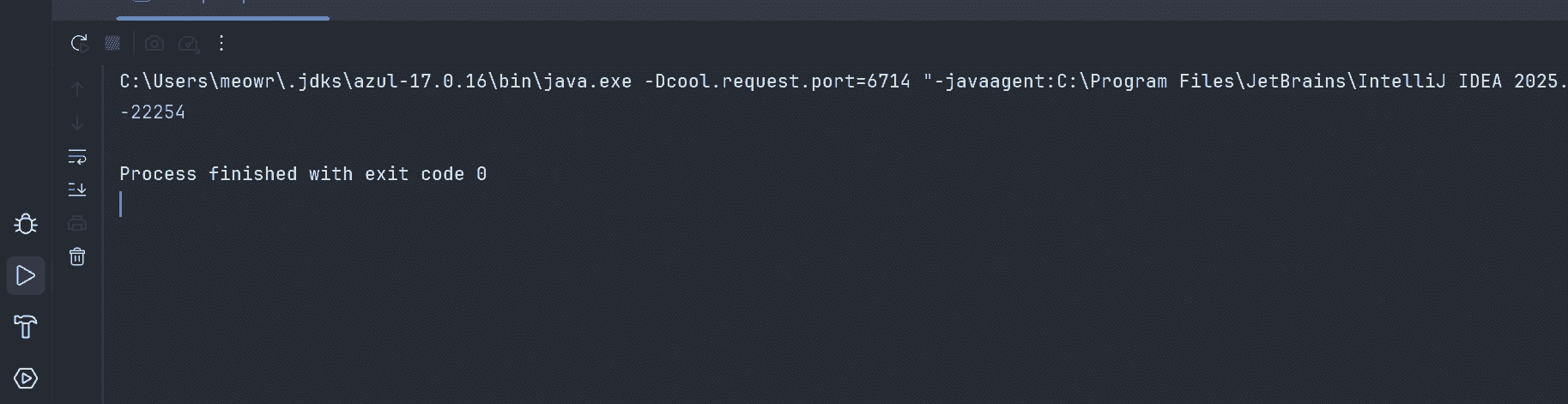
线程安全版本
package demo;
import demo.annotations.ThreadSafe;
public class InterruptSleepDemo { private static int a = 0;
@ThreadSafe public static void main(String[] args) throws InterruptedException { Thread t1 = new Thread(() -> { synchronized (InterruptSleepDemo.class) { for (int i = 0; i < 100000; i++) { a++; } } });
Thread t2 = new Thread(() -> { synchronized (InterruptSleepDemo.class) { for (int i = 0; i < 100000; i++) { a--; } } });
t1.start(); t2.start(); t1.join(); t2.join();
System.out.println(a); }}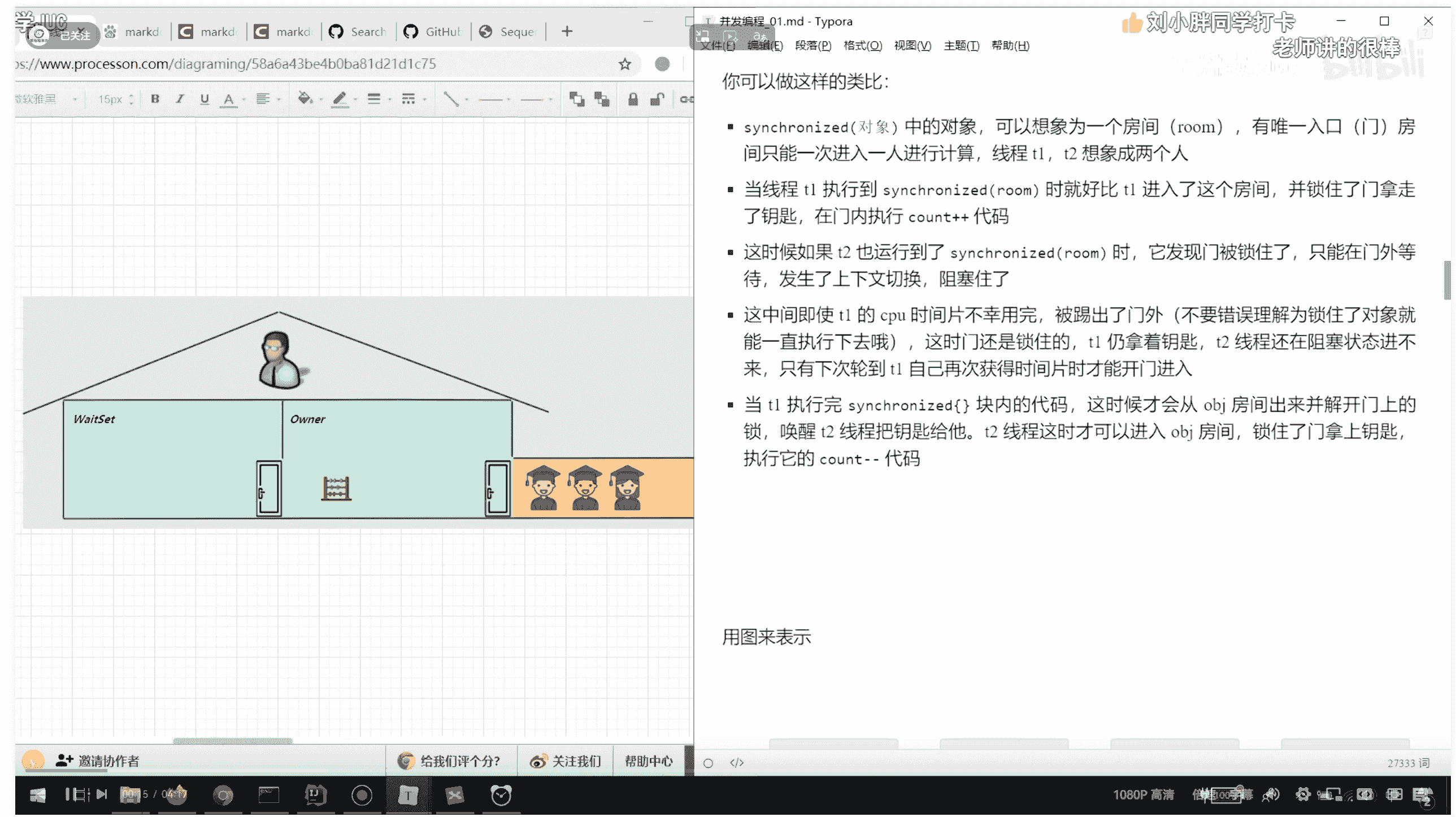
通过让两个线程竞争同一把锁(InterruptSleepDemo.class),可以保证对 a 的复合操作不被打断。
4. synchronized 加在不同位置,锁的对象不同
| 写法 | 锁对象 |
|---|---|
synchronized 实例方法 | 当前实例(this) |
static synchronized 方法 | 当前类的 Class 对象 |
synchronized (obj) {} | 指定对象 obj |
5. 第二组案例:卖票超卖问题
非线程安全版本(会超卖)
package demo;
import demo.annotations.NoThreadSafe;
import java.util.ArrayList;import java.util.Collections;import java.util.List;import java.util.Random;
public class TicketTest { public static void main(String[] args) throws InterruptedException { TicketWindow ticketWindow = new TicketWindow(10000);
List<Integer> list = Collections.synchronizedList(new ArrayList<>()); List<Thread> threads = new ArrayList<>();
for (int i = 0; i < 10000; i++) { Random random = new Random(); Thread thread = new Thread(() -> { int want = random.nextInt(10); int sold = ticketWindow.sell(want); list.add(sold); }); threads.add(thread); thread.start(); }
for (Thread t : threads) { t.join(); }
int soldTotal = list.stream().mapToInt(Integer::intValue).sum(); System.out.println("最终剩余: " + ticketWindow.getCount()); System.out.println("卖出统计: " + soldTotal); System.out.println("校验(剩余+卖出): " + (ticketWindow.getCount() + soldTotal)); }}
class TicketWindow { private int count;
public TicketWindow(int count) { this.count = count; }
@NoThreadSafe public int getCount() { return count; }
@NoThreadSafe public int sell(int amount) { if (count >= amount) { count -= amount; System.out.println("卖出" + amount + " ==== 剩余: " + count); return amount; } System.out.println("卖出0 ==== 剩余: " + count); return 0; }}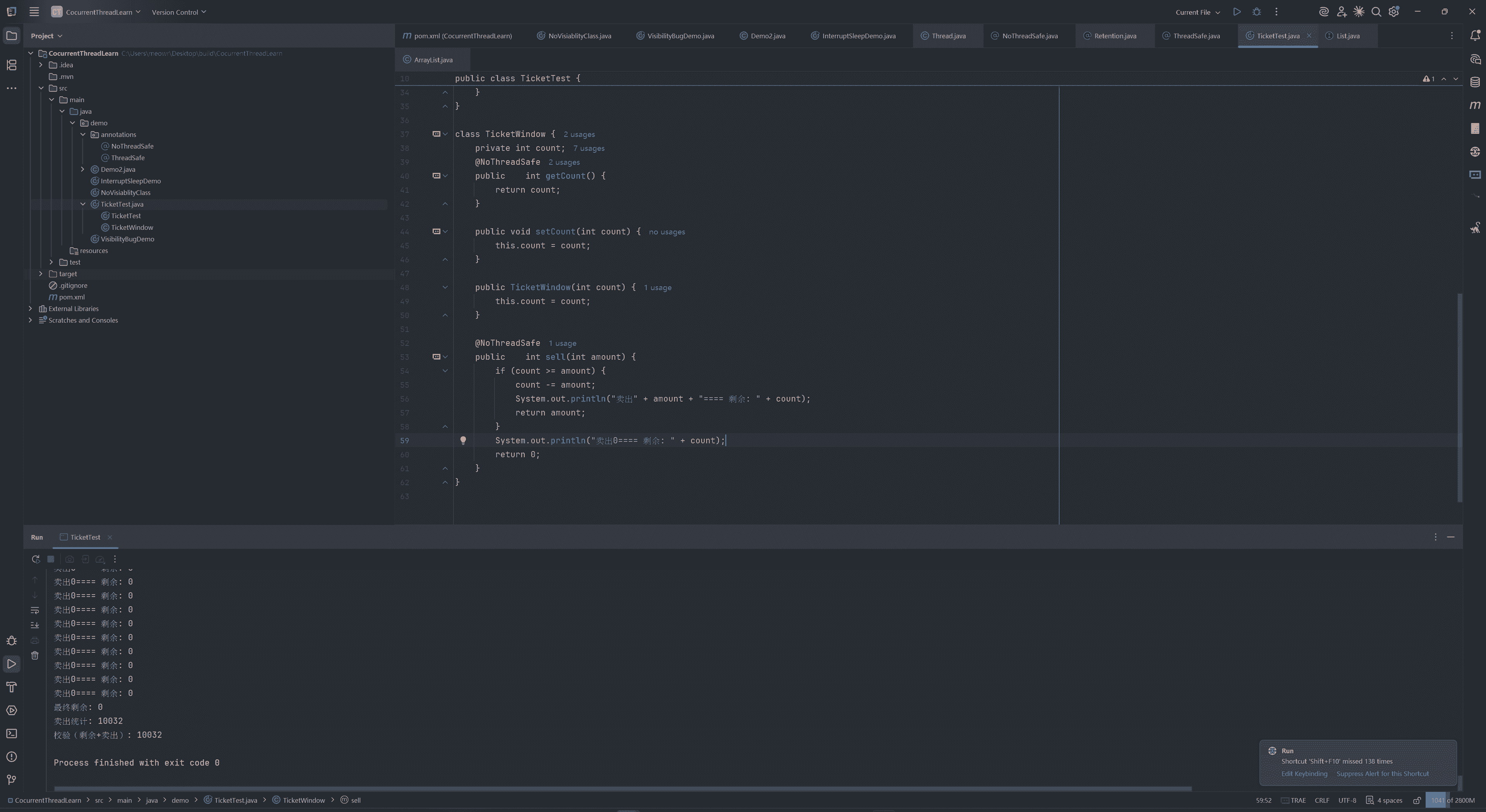
问题根因:sell() 中的 if (count >= amount) + count -= amount 不是原子操作,多个线程会交错执行。
线程安全版本
package demo;
import demo.annotations.ThreadSafe;
import java.util.ArrayList;import java.util.Collections;import java.util.List;import java.util.Random;
public class TicketTest { public static void main(String[] args) throws InterruptedException { TicketWindow ticketWindow = new TicketWindow(10000);
List<Integer> list = Collections.synchronizedList(new ArrayList<>()); List<Thread> threads = new ArrayList<>();
for (int i = 0; i < 10000; i++) { Random random = new Random(); Thread thread = new Thread(() -> { int want = random.nextInt(10); int sold = ticketWindow.sell(want); list.add(sold); }); threads.add(thread); thread.start(); }
for (Thread t : threads) { t.join(); }
int soldTotal = list.stream().mapToInt(Integer::intValue).sum(); System.out.println("最终剩余: " + ticketWindow.getCount()); System.out.println("卖出统计: " + soldTotal); System.out.println("校验(剩余+卖出): " + (ticketWindow.getCount() + soldTotal)); }}
class TicketWindow { private int count;
public TicketWindow(int count) { this.count = count; }
@ThreadSafe public synchronized int getCount() { return count; }
@ThreadSafe public synchronized int sell(int amount) { if (count >= amount) { count -= amount; System.out.println("卖出" + amount + " ==== 剩余: " + count); return amount; } System.out.println("卖出0 ==== 剩余: " + count); return 0; }}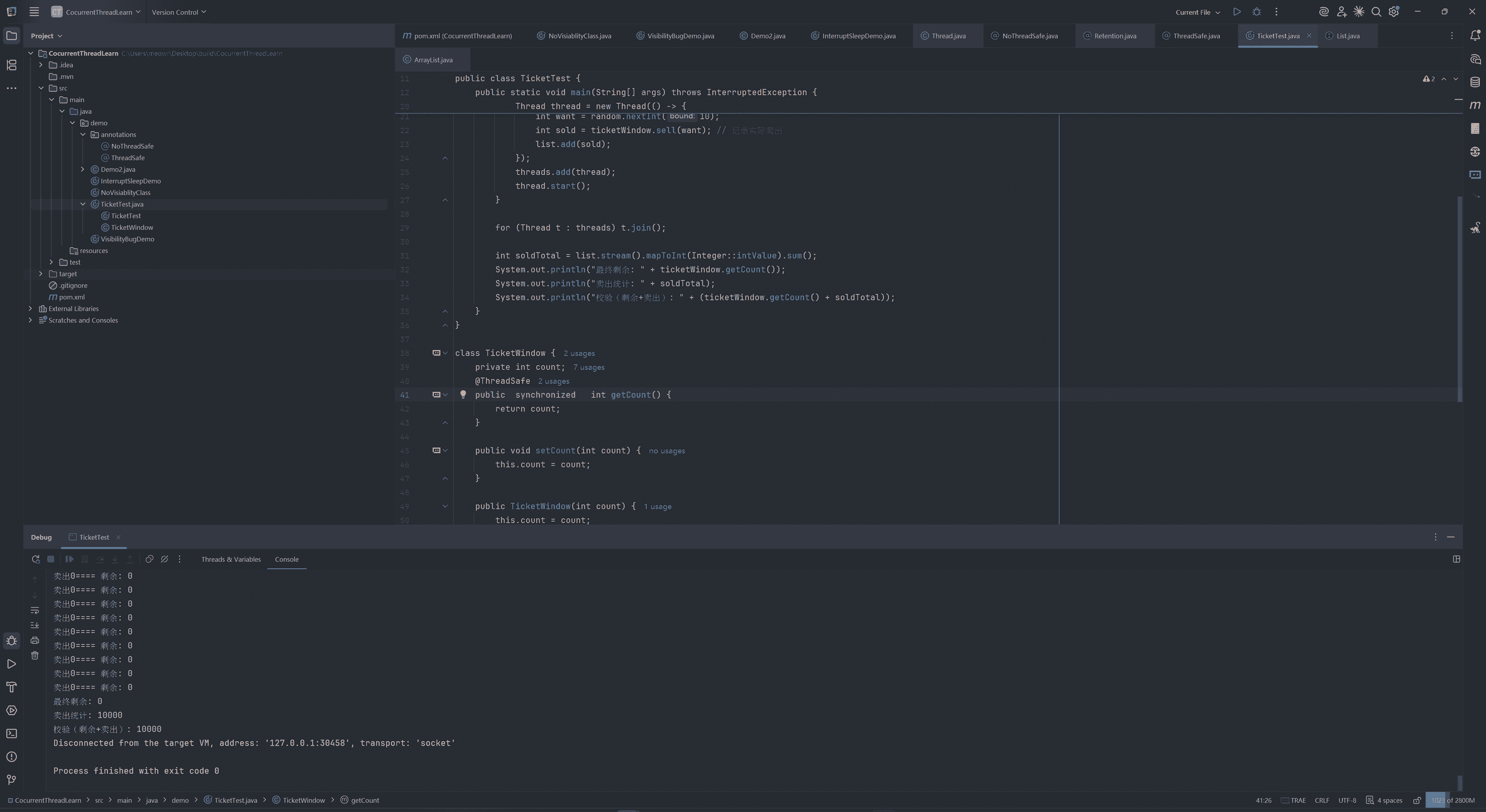
6. 第三组案例:转账(涉及两个对象)
当一个操作同时涉及两个账户对象时,只锁 this 往往不够。
非线程安全版本
package demo;
import java.util.ArrayList;import java.util.List;
public class TransferTest { public static void main(String[] args) { Account a = new Account(10000); Account b = new Account(10000); List<Thread> threads = new ArrayList<>();
for (int i = 0; i < 1000; i++) { Thread thread = new Thread(() -> { a.transfer(b, 1000); b.transfer(a, 1000); }); thread.start(); threads.add(thread); }
for (Thread thread : threads) { try { thread.join(); } catch (InterruptedException e) { Thread.currentThread().interrupt(); } }
System.out.println("a.getAmount() = " + a.getAmount()); System.out.println("b.getAmount() = " + b.getAmount()); System.out.println(a.getAmount() + b.getAmount()); }}
class Account { private long amount;
public Account(long amount) { this.amount = amount; }
public long getAmount() { return amount; }
public void setAmount(long amount) { this.amount = amount; }
public void transfer(Account target, long money) { if (this.amount >= money) { this.setAmount(this.getAmount() - money); target.setAmount(target.getAmount() + money); } }}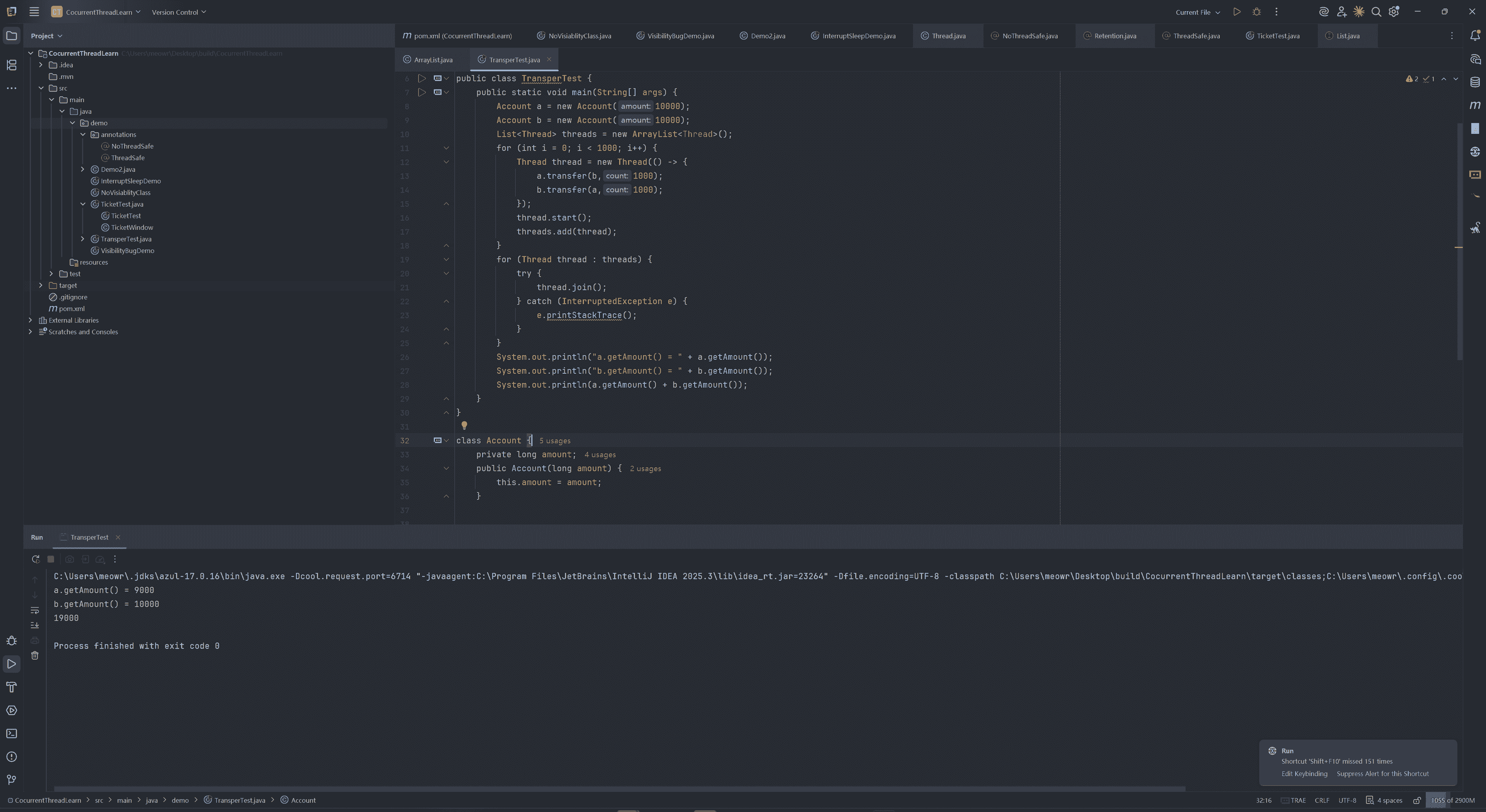
改进版本(按固定顺序锁两个账户,避免死锁)
你原来使用
synchronized (Account.class)也能保证正确性,但并发度会很低(所有账户互相串行)。
package demo;
import demo.annotations.ThreadSafe;
class Account { private long amount;
public Account(long amount) { this.amount = amount; }
public long getAmount() { return amount; }
@ThreadSafe public void transfer(Account target, long money) { if (target == null || target == this || money <= 0) { return; }
Account first = this; Account second = target;
if (System.identityHashCode(first) > System.identityHashCode(second)) { first = target; second = this; }
synchronized (first) { synchronized (second) { if (this.amount >= money) { this.amount -= money; target.amount += money; } } } }}这种做法的优点:
- 正确性:同时保护两个账户余额。
- 安全性:固定加锁顺序,降低死锁风险。
- 并发性:不同账户对之间仍可并行执行,不会像类锁那样全局串行。
7. 小结
synchronized的核心是:同一把锁保护同一份共享状态。- 只要是「读-改-写」复合操作,就要警惕竞态条件。
- 涉及多个共享对象时,必须设计好锁粒度和加锁顺序。
如果你正在系统学习 JUC,下一步建议对比:synchronized、ReentrantLock 与 Atomic* 的适用边界与性能差异。
发现错误或想要改进这篇文章?
在 GitHub 上编辑此页 JUC-synchronized
© 2021 - 2026 MeowRain 采用
CC BY-NC-SA 4.0 许可
RSS / 网站地图
由 Astro 和 Fuwari 强力驱动
本网站代码 已开源 (4561fb4 @ 2026-10-11 21:22:19)
 晋ICP备2025071728号-1
 晋公网安备14060202000213号
RSS / 网站地图
由 Astro 和 Fuwari 强力驱动
本网站代码 已开源 (4561fb4 @ 2026-10-11 21:22:19)
晋ICP备2025071728号-1
晋公网安备14060202000213号